OncAdios LLC

Calibrated oncology-development judgment for AI-oncology companies — before the first major FDA interaction.

The scarce input is not the AI. It is the senior clinical-regulatory operator who knows when the AI is wrong — and has thirty years of FDA interactions to prove it.

What I Do

Three things, mapped to the three failure modes I expect to see at the FDA over the next twelve to eighteen months.

  • Endpoint and design strategy the FDA can actually review. I take AI-discovered targets and AI-prioritized candidates and translate them into endpoint structures, trial designs, and pre-IND positions the agency has precedent to accept. The model's prediction is not the endpoint; the endpoint is what the agency will adjudicate. Where established precedent fits, I use it. Where the science calls for a reasoned departure — accelerated approval on early response, novel surrogate endpoint, tumor-agnostic indication, external control — I propose it on terms the agency can engage with.
  • Trial designs that enroll. I pressure-test inclusion/exclusion logic, referral patterns, line-of-therapy windows, and combination-regimen practicality against what community oncologists will actually prescribe — before the protocol is locked. A pristine design that collapses on contact with the clinic is the modal failure of AI-led trial planning. It is also avoidable.
  • Regulatory translation, not regulatory engineering. Serious AI/bio teams already have provenance, validation, and drift discipline. The failure mode is rarely missing engineering. The failure is that the engineering has not been translated into the language and format a CDER review division will accept, at the documentation tier the model's context of use requires. That translation is the work.

What Calibration Means in Practice

Calibration is the accuracy of confidence, not the volume of opinion.

In an AI-oncology program, calibration is the ability to look at a model's prediction, an analyst's deck, or an enthusiastic founder slide and tell — with reasons — what is true, what is conditionally true, and what will not survive a pre-IND meeting.

Every claim of consequence in an OncAdios deliverable is retrieved, source-tiered, and externally cited. Every recommendation surfaces the reasoning trail, the strongest counterevidence, and the conditions under which the recommendation would change. This is not a process — it is the calibration discipline that makes the recommendation auditable.

Calibration also means knowing when the right path is not the path the published guidance describes. Some of the most consequential oncology approvals — accelerated approvals built on early response data, tumor-agnostic labels, novel surrogate endpoints validated under unmet need — came from sponsors who engaged the agency in territory the agency itself acknowledged was less well understood, and who built the evidentiary package that made the new path defensible. Fitting inside the guidance is often correct. Proposing beyond it, in dialogue with the agency, is sometimes correct. Telling the two apart is the work.

When the evidence does not support a recommendation, OncAdios refuses to make one. Refusal is part of the output, not the absence of one.

Engagement Structures

Three structures, in descending order of typical availability.

Who I Work With

You and I will be a fit if:

  • Your company is pre-IND or in Phase I, with a Series A or B closed in the last 18 months.
  • Your founding team is strong on computation and science, and already sees clinical-regulatory judgment as the next seat to fill — not the last.
  • The decisions in front of you in the next 90 to 180 days are real and load-bearing: endpoint strategy, trial design, FDA interactions, indication choice.
  • You are open to an equity-anchored structure with real ownership and direct accountability — not a name-on-deck advisory retainer.

I am deliberately not in the market for cash-only consulting engagements or name-on-deck board-call retainers. Those contracts consume optionality and produce nothing for the company that a more junior advisor could not. The right shape is a small number of companies, deep involvement, real ownership, and accountability for the outcomes that determine whether the molecule lives or dies.

What the First 90 Days Look Like

A four-phase, twelve-week operating arc.

Each phase produces a specific artifact and retires a specific decision: Diagnostic → Endpoint and indication → Trial design and FDA interaction plan → Regulatory translation and handoff.

Two variants are maintained, one for each kind of company that benefits from this work:

  • Biotech-shaped AI-oncology companies — the canonical case. Program-owners running their own programs toward an IND under their own name. The work shows up at the agency–sponsor interface.
  • AI-platform companies selling into pharma — the parallel arc. Agency-facing work becomes partner-facing work; the platform validates its capabilities so partners can defend the platform's role in their submissions.

Both share the same calibration discipline and the same expansive-then-decisive arc inside Phase 2.

The Standard

Behind every OncAdios deliverable is a working calibration system, not a marketing claim.

A Citation-Required Output Contract enforces refuse-or-cite by default. An internal benchmark audits agent outputs against physician-validated rubrics. An AI Agent Operating Charter defines what data is processed in which channel, with strict confidentiality discipline for pre-competitive and identifying client material. Every load-bearing recommendation surfaces, alongside the conclusion, the sources used, the alternatives considered, the strongest counterevidence, and the conditions under which the conclusion would change.

When you ask "how do you know this is right?" — the answer is a working system, not a policy document. This standard is what makes a confidence claim defensible — both when it agrees with established guidance and when it proposes to move beyond it.

Read the operating standard in detail →

About

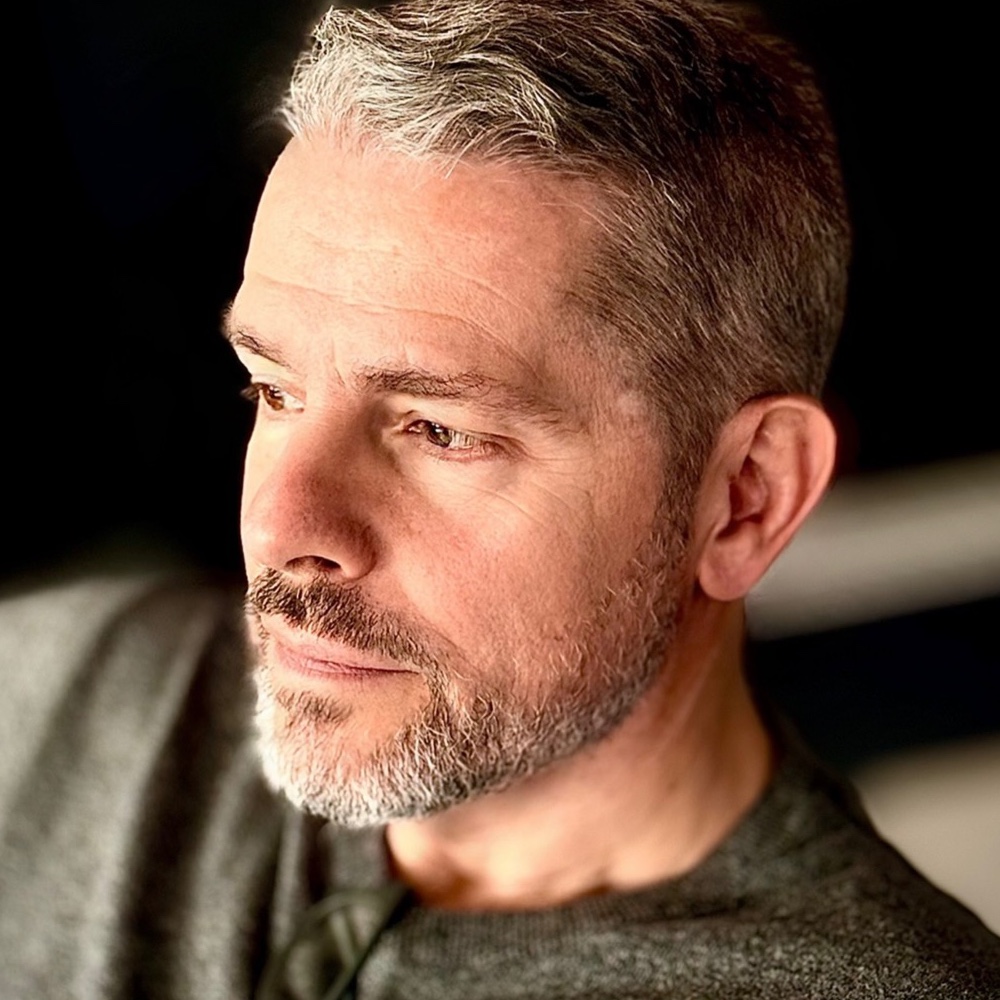
Jesús Gómez-Navarro, M.D.

Board-certified medical oncologist with 30+ years in oncology drug development at Pfizer, Millennium, and Takeda. As VP, Head of Clinical R&D at Takeda Oncology (2011–2020) and Takeda's inaugural Distinguished R&D Fellow (2020–2022), his strategic and technical leadership contributed to seven anticancer approvals across FDA, EMA, PMDA, and NMPA — NINLARO, ADCETRIS, ALUNBRIG, ICLUSIG, ZEJULA, CABOMETYX, and EXKIVITY — and to advancing the anti-CTLA4 antibody tremelimumab from first-in-human through Phase 3 (later approved as IMJUDO).

He founded OncAdios LLC in 2022 to bring calibrated clinical-regulatory judgment to AI-oncology and biotech companies as fractional CMO, board director, or co-founder.

How to Start a Conversation

A small number of engagements per year.

If the description above sounds like the seat you have not yet filled — and the decisions in front of you in the next 90 to 180 days are real — the conversation is worth having.

jgn@oncadios.com
linkedin.com/in/jesus-gomez-navarro